
From inbound RFP to submission-ready proposal.
Five concrete steps. One dependency-gated pipeline. Real inputs in, review-ready proposals out — in minutes, not weeks.
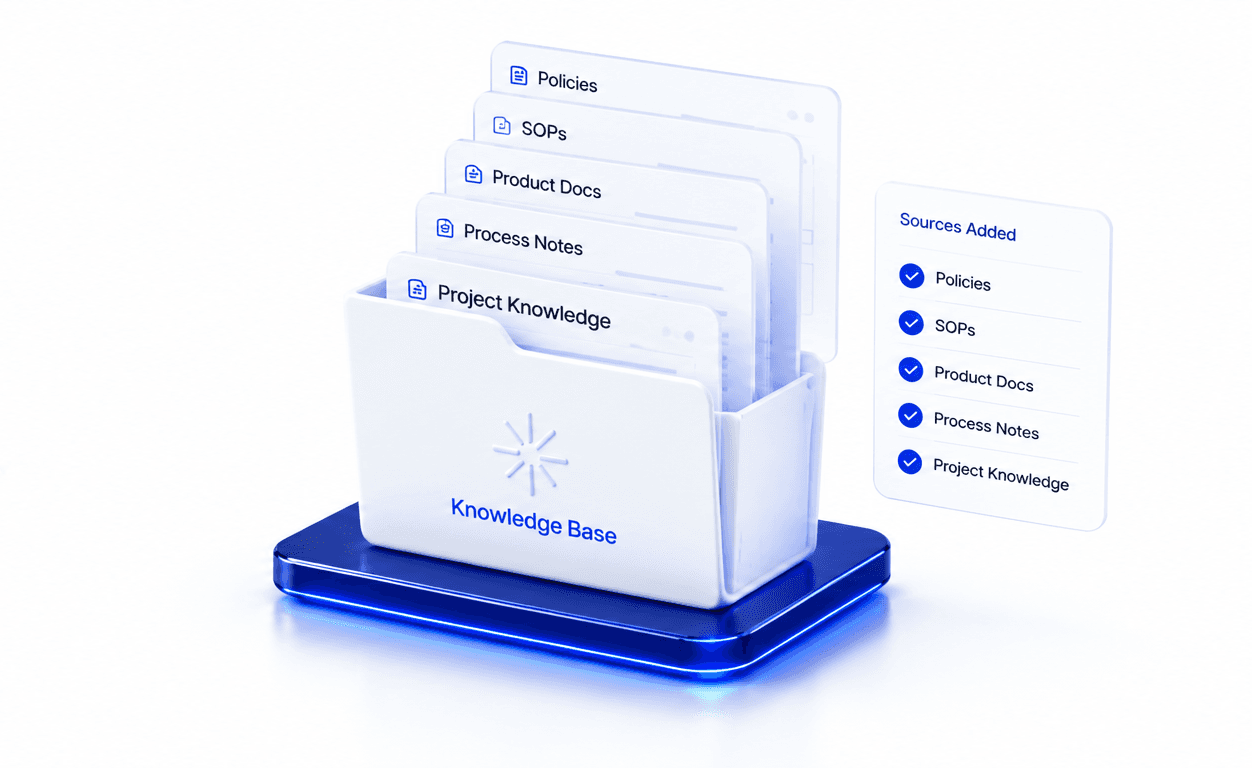
Upload Your Knowledge Base
Centralize the internal information that runs your company — SOPs, policies, product docs, process notes, and project history. BidAuthor uses it to ground every response in real, current context.
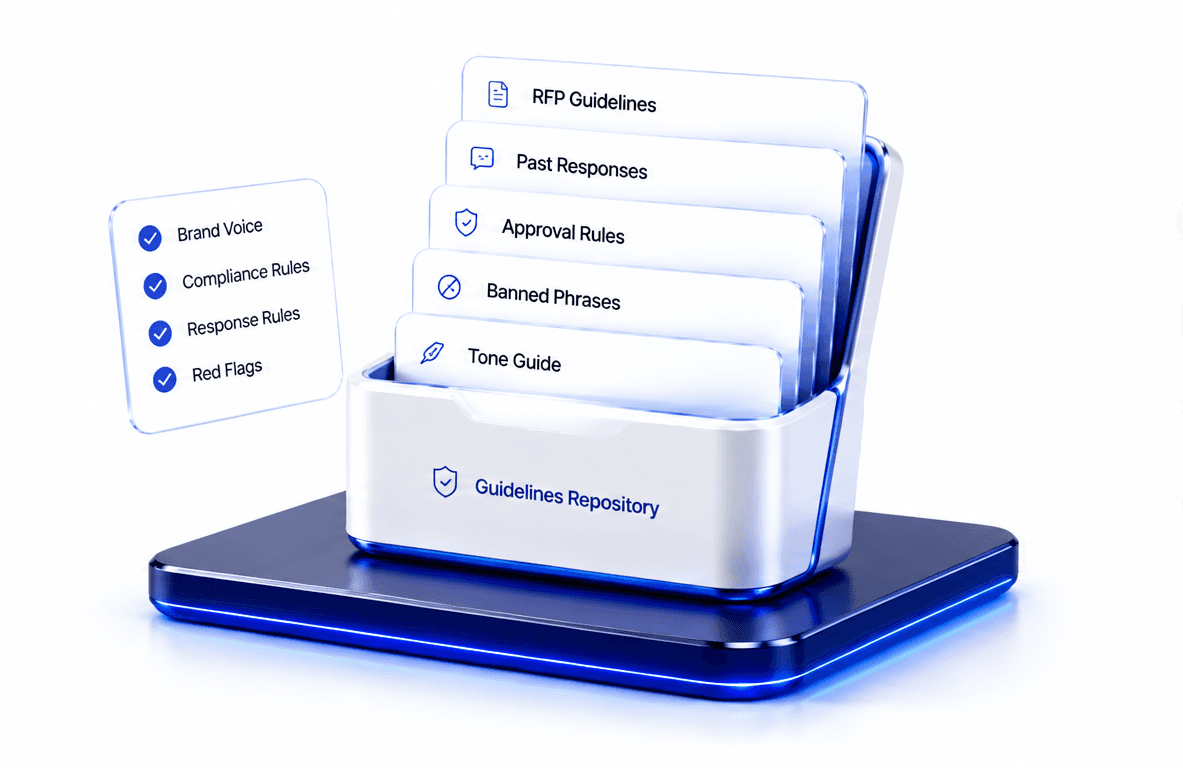
Upload Your Guidelines
Add your proposal playbooks, response rules, approved phrasing, and red flags. Arthur learns how someone on your team would actually answer, then mirrors that voice and avoids the wrong claims.
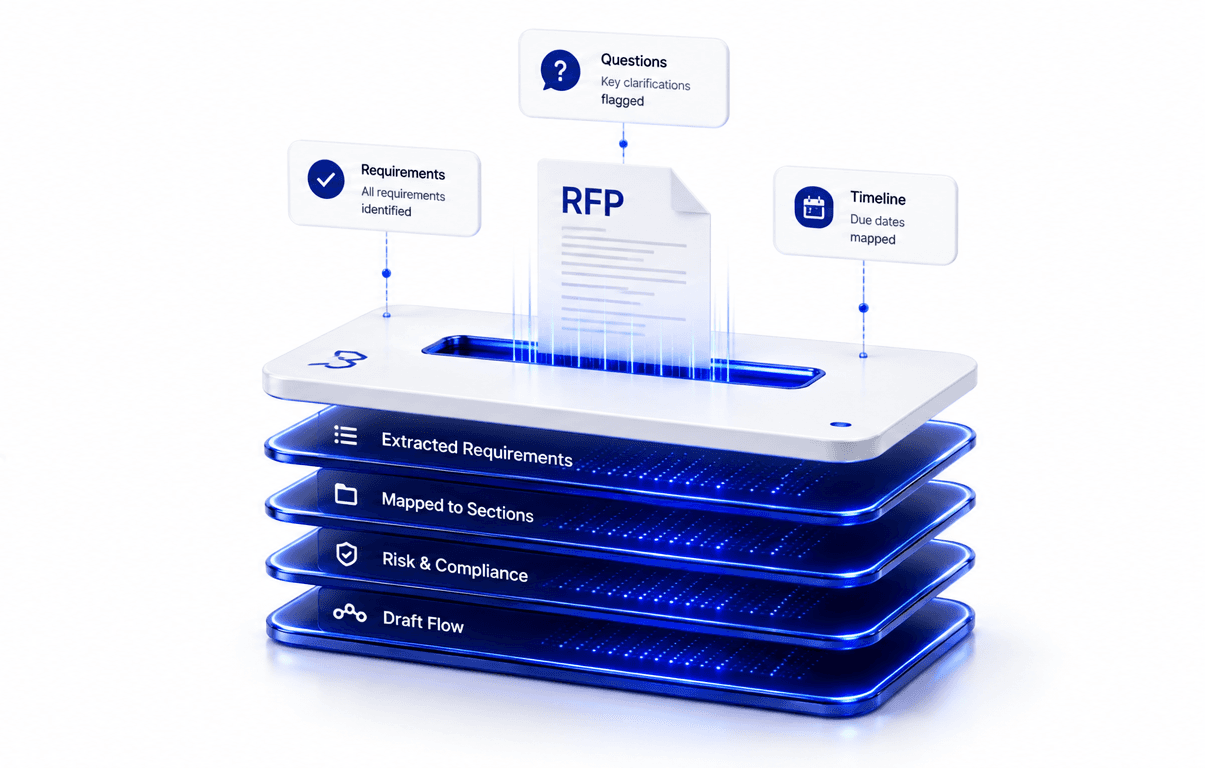
Upload the RFP
Drop in the live RFP, statement of work, and attachments. BidAuthor extracts every requirement, maps it to sections, flags risks, and pushes the package through your response pipeline.
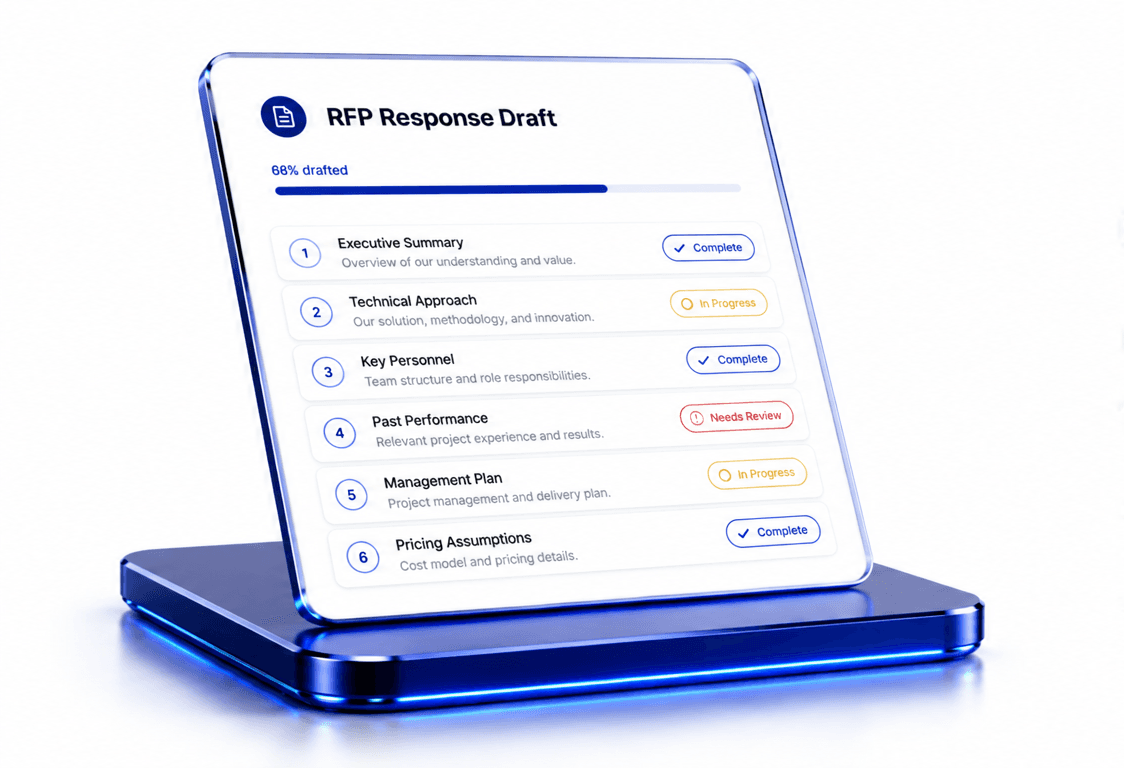
Generate & Refine the Response
Arthur drafts each answer, tracks live status across the document, and helps your team move every question from in-progress to review-ready — without losing the thread.
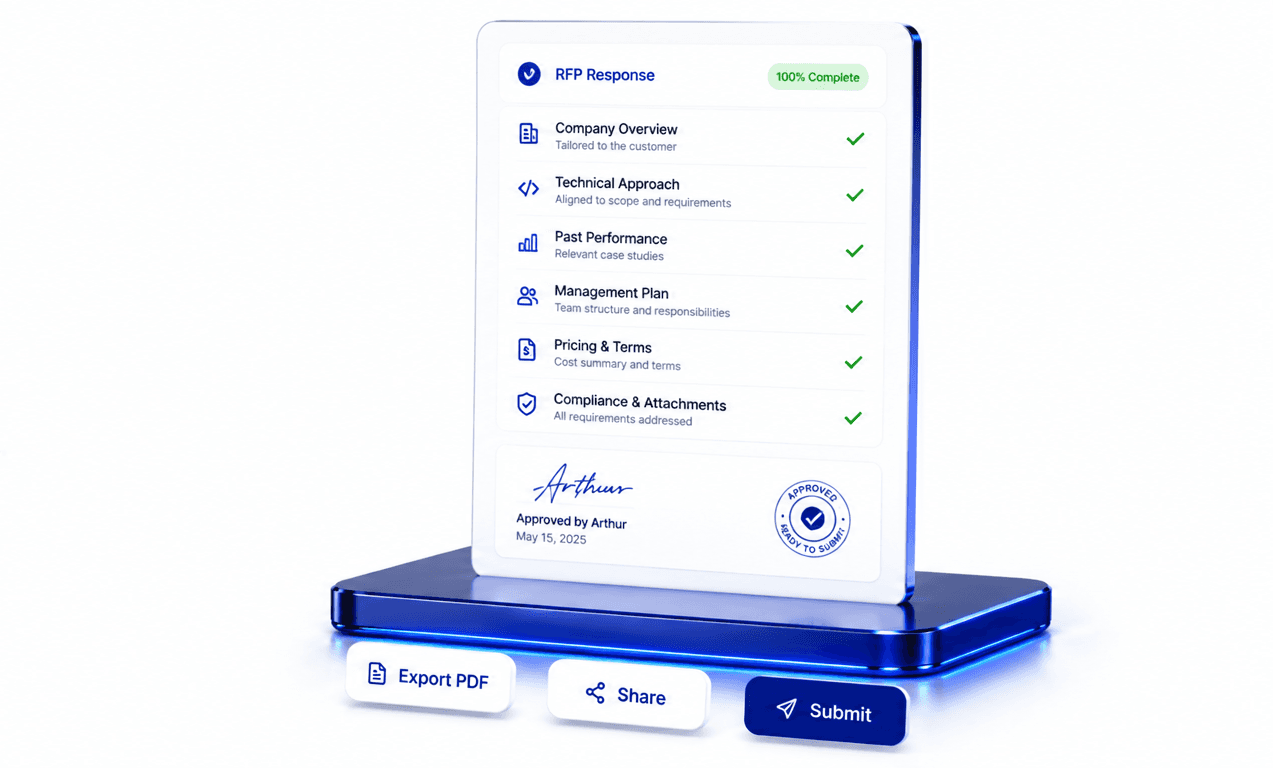
Export & Submit the Proposal
Finalize the response, export a polished proposal package as PDF or DOCX, and ship a submission-ready document to your customer with confidence.
Answers that build on each other.
An RFP isn't a flat list of independent questions. Arthur treats it like the structured document it is — answers cascade.
Order matters
Some RFP questions can't be answered correctly until others are. Asking for pricing before scope is settled produces nonsense.
Arthur builds the graph
Every requirement is extracted and linked to its dependencies — which sections rely on which.
Parents gate children
Children wait until parents resolve. No contradictions, no orphan references, no hallucinated cross-section claims.
What goes in, what comes out.
A worked example using one of our reference proposal teams. Source documents on the left; the response Arthur generates on the right.
What you bring
Astrolabe-Methodology-v3.pdf
Knowledge base · 14 pages
Response-tone-guideline.md
Guidelines · 800 words
Cascadia-Bio-RFP.pdf
Inbound RFP · 42 questions across 11 sections
What Arthur returns
Cascadia-Bio-Response.docx
11 of 11 sections drafted · 55 cited sources · 33 sec
Astrolabe's executive-coaching engagements are structured around a four-phase framework — assessment, alignment, acceleration, and accountability — refined over 12 years of practice with Fortune 500 leadership teams[1][2]. Each engagement begins with a 360° intake calibrated to the client's strategic objectives[3]…
Collaborate & submit
On Team and Business plans, assign sections to teammates, review with approval workflows, and export polished proposals as PDF or DOCX — ready to submit.
Common questions
Pre-empting the questions every proposal team asks first.
See it in action
Sign up free and generate your first proposal in minutes — 50 credits, no card required.
No credit card required